Medical technology development is driven by a variety of factors. The most common drivers are to extend or improve the capabilities of existing technologies:
Medical technology development is driven by a variety of factors. The most common drivers are to extend or improve the capabilities of existing technologies:
 Addressing underserved clinical need
- enabling treatment of “untreatable” patient types
- enabling shift of procedures to outpatient or doctors’ offices
- Reducing cost
- less expensive device
- faster healing time
- Improving performance
- reducing operating time
- lowering the rate of complications
 Addressing underserved clinical need
These drivers underlie much activity in medical technology development, since they typically focus on designing products that are improvements upon existing, FDA-approved or CE-Mark technologies. The hurdles to these developments are (relatively) few, requiring little more than being able to construct an argument that a newly developed medical product provides a feature that is “better” than available technologies. (This, of course, represents the putative reason for high healthcare costs, with only nominally “new” technologies commanding price premiums over established ones, but that is the focus of a different discussion.)
In reviewing the formation of new medtech companies that we have recorded in our data over the past three years, there are a number of very common drivers:
- Intraoperative imaging, monitoring, disease detection
– gas spectroscopy of electrosurgery smoke (“iKnife”)
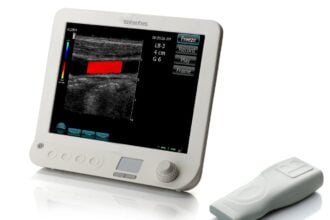
– real-time imaging (ultrasound, MRI)
– intraoperative microscopy (SamanTree Technologies)
- Cell or tissue regeneration to replace diseased or traumatic tissue
– biomaterials
– growth factors
– extracellular matrices
– synthetics (e.g., cartilage)
- “Back-filling” in endoscopic surgery
– development of surgical instrumentation for use in laparoscopic surgery, single-incision (or single-port) laparoscopy NOTES other endoscopy (arguably, NOTES is not a radically new approach but the embodiment of what “minimally invasive” endoscopy is when pushed to its logical limits).
– endoscopic and surgical instrumentation to allow/facilitate office-based procedures
- “generic” medical devices
- biodegradable implants
- transcatheter technologies
Among the less common of these technologies are those that emerge from the application of a fundamentally different approach to healthcare (call it “paradigm shift” or “game-changing” or whatever your preferred buzz-term). These technologies consider treatment from a very different perspective that fundamentally change the rules of the game. To some degree, radical change stems simply from the emergence of a new technology that enables radically different treatment, such as the use of stem cells to restore pancreatic function in diabetes. In other cases, medtech manufacturers have recognized the law of diminishing returns in pursuing incremental innovation of established technologies and have instead forged entirely new paths to treatment, as in the use of neuromodulation for pain management (and other clinical end-points) or transcatheter procedures to replace invasive cardiovascular surgery.
Examples of game-changing technologies:
- Transcatheter alternatives to surgery
- Treatment of hypertension via ablation of sympathetic nerve
- Neuromodulation or neurostimulation for relief of chronic pain or treatment of hypertension and other conditions
- Intraoperative pathology detection (ultrasound, iKnife mass spectrometry, optical coherence tomography)
- Stem cell or induced pluripotent stem cells applied to treatment of diabetes, other diseases
In the end, the bulk of medtech developments arise from innovative improvements on existing technologies to create competitive advantage, but the mistake for any current market participant is to not remain vigilant in considering the developments of current or potential competitors pursuing radical alternatives to more effectively satisfy clinical (and economic) need.
(medical technology / shutterstock)