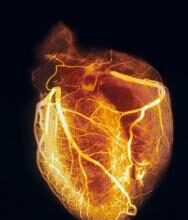
A middle-aged woman woke up in the middle of the night with pain in her chest and shortness of breath. She was afraid that she was having a heart attack. So she called 911 and was taken to the nearest hospital where the cardiologist promptly performed a procedure called cardiac catheterization “to examine blood flow to the heart and to test how well the heart is pumping” (American Heart Association, 2009).
A middle-aged woman woke up in the middle of the night with pain in her chest and shortness of breath. She was afraid that she was having a heart attack. So she called 911 and was taken to the nearest hospital where the cardiologist promptly performed a procedure called cardiac catheterization “to examine blood flow to the heart and to test how well the heart is pumping” (American Heart Association, 2009).
In the recovery room, the doctor told her and her husband that her “heart is fine and that there are no blockages.” “However, your heart muscle is weak. And for that reason, we are keeping you overnight to do further testing.” A couple of hours later, an echo-cardiogram (ultrasound of the heart) was performed which showed that her ejection fraction/EF (a measurement of how strong or weak the heart muscle is) is abnormally low. Her blood work however, showed that she did not have a heart attack. The doctor then proceeded to inform her that she has a classic case of the “broken heart syndrome” brought about by the sudden and violent death of her son. The next day, she was discharged with a follow up appointment in 7-14 days for a repeat echo-cardiogram. The doctor also told her that he expects to see full recovery then.
Broken heart syndrome is clinically known as “stress cardiomyopathy.” This can be triggered by extremely stressful event such as the unexpected death of a loved one. The body responds to the stressor by releasing large amounts of adrenalin and other stress hormones for days. These hormones and their breakdown products become chemically toxic to the heart and “stun” the heart muscle producing symptoms that mimic that of a heart attack – chest pain, shortness of breath, congestive heart failure and low blood pressure.
However, researchers have determined that stress cardiomyopathy is clinically different from that of a heart attack. For one, it occurs very suddenly and mostly in middle-aged women who were previously healthy and have no or few risk factors for heart disease. A certain blood work called cardiac enzymes that are elevated in cases of a heart attack come back normal. And the cardiac catheterization or angiogram usually shows no blockages in the arteries that are supplying the heart muscle.
Because of the “stunning” of the heart muscle, the echo-cardiogram can reveal a decreased EF. This condition can be life-threatening when the person goes into congestive heart failure and may even develop lethal abnormal heart rhythms. But in most cases, the condition improves quickly. And since it only”stuns” the heart muscle and “does not kill” it in the case of a heart attack, the heart muscle damage is only temporary. The heart muscle recovers completely and pretty quickly usually within a couple of weeks or so.
While not entirely understanding the mechanism of this phenomenon, our great-great grandparents believed that extreme emotions can physiologically affect the heart. Hence, the most common phrase “died with a broken heart.” But recent studies have shown that although broken heart syndrome occurs suddenly and unexpectedly and can be quite frightening, prognosis is excellent. Recurrence is rare. Recovery is quick and complete, which leads us to the wonderful conclusion that “a broken heart can indeed be mended.”
Sources:
What is Cardiac Catheterization. American Heart Association. 2009 http://www.americanheart.org
Broken Heart Syndrome: Real But Potentially Deadly. John Hopkins Medicine. February,2005. http://www.hopkinsmedicine.org/press_releases/2005/02_10_05.html
This article was previously published on Digital Journal.
– Written by Gwen Griswold, RN BSN, Division of Interventional Radiology, Sinai Hospital