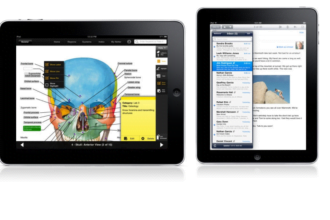
When feeling depressed or anxious, some people do not want to go to a therapist, either because of the cost, the stigma, or both. MoodKit is a smartphone app that can help with depression and other psychological issues through the use of a modified, self-administered Cognitive-Behavioral Therapy (CBT).
When feeling depressed or anxious, some people do not want to go to a therapist, either because of the cost, the stigma, or both. MoodKit is a smartphone app that can help with depression and other psychological issues through the use of a modified, self-administered Cognitive-Behavioral Therapy (CBT). Depression can often lead to more depression, as people look at their situation in distorted ways and withdraw from activities that would  otherwise make them feel better. CBT disrupts that process by helping people keep track of their moods and activities and then prompts them to do the things that make them feel accomplished and connected. MoodKit allows users to track the connections between their activities, moods, and thoughts. For example, they may indicate that today they ate alone at a fast-food restaurant and during the meal, thought about their friend, who did not respond to a text message, and felt that the friend does not care about them. They may also record that they were in a poor mood. MoodKit helps users associate these three things in order for them get a better idea of what thoughts and activities make them feel depressed or anxious, and which ones make them feel good. Another benefit to MoodKit is that, as many people carry their smartphones with them all of the time, it is constantly available, and much more portable and discrete than a self-help book.
This app can also be used in tandem with more traditional CBT with a therapist. While many therapists may harbor mixed feelings about implementing mobile technology as part of their clinical practice, it is likely that programs such as MoodKit can improve the efficacy of their treatments. CBT emphasizes skill-building and active participation on the client’s part through use of homework assignments. When MoodKit is integrated into more traditional CBT, it can act as the homework assignments, with activities such as daily mood ratings, a calendar to keep track of activities, a journal, and activity suggestions including suggestions to increase productivity, physical activity, healthy habits, social activities, with the possibility to mark favorites for easy access. The journaling option has multiple pre-formatted templates to develop various skills. There is an option to export all mood charts, journals and activities to the therapist, or to print them wirelessly. When used in conjunction with traditional therapy, MoodKit is likely to reduce the number of required CBT sessions, because it provides the therapist with statistical data about the patient. This data allows therapists to identify the triggers which cause anxiety and depression.
One of the more helpful features in the MoodKit app is the behavioral activation tool. Based on the analysis of the user’s data, it suggests activities that will help them feel better. Over 150 activities are available in the app, along with examples and tips for implementation. After the user engages in a few of these activities, the app has an intelligent algorithm that suggests future activities based on the ratings that the user has given for the activities he has tried. Another tool allows the user to describe their situation (e.g.“I didn’t get that promotion at work that I expected”), their initial thought about the situation (e.g.“I’m never going to move up in my job”), identify the distortions in their though process(in this case “catastrophizing” and “fortune telling”), and come up with a modified thought (e.g.“It might take longer than I hoped, but that doesn’t mean I’ll never get that promotion”). On the same screen, users can list their feelings and rate the change between their initial and modified thoughts. This is a part of the cognitive restructuring tool in the app, which helps users manage their negative feelings related to a situation by generating adaptive alternatives to these thoughts and feelings. These situations, initial and modified thoughts, feelings, and distortions are all recorded through step-by-step prompts.
More Read

While there have not yet been many studies determining the efficacy of the MoodKit app, there is no reason why it should not be at least as efficacious as traditional CBT homework assignments, especially when paired with traditional therapy. It is based on the tenets of CBT, which has been found to be an effective therapeutic approach, but it has the benefit of being portable. One of the downsides to traditional therapy is that, in the moment when someone is thinking a distorted or upsetting thought, it is not possible to always have a therapist or even a worksheet with them. There are times when it is not appropriate to journal about one’s mental health, but it is almost always socially acceptable to use your smartphone. As one user of this app noted, “As far as anyone else knows, I’m just another guy texting or checking email, not someone completing a therapy assignment”.
image: Flickr