For many radiologists and other physicians, the Holy Grail in ultrasound imaging has been a system that features wireless transducers. Transducer cables have always been a cumbersome necessity, but they present challenges that go far beyond the annoying twisted wires of your ear buds. Not only are they an impediment to fast and ergonomic examination procedures, but they also present an infection control risk in interventional settings even when they are covered in sterile sheaths.
For many radiologists and other physicians, the Holy Grail in ultrasound imaging has been a system that features wireless transducers. Transducer cables have always been a cumbersome necessity, but they present challenges that go far beyond the annoying twisted wires of your ear buds. Not only are they an impediment to fast and ergonomic examination procedures, but they also present an infection control risk in interventional settings even when they are covered in sterile sheaths.
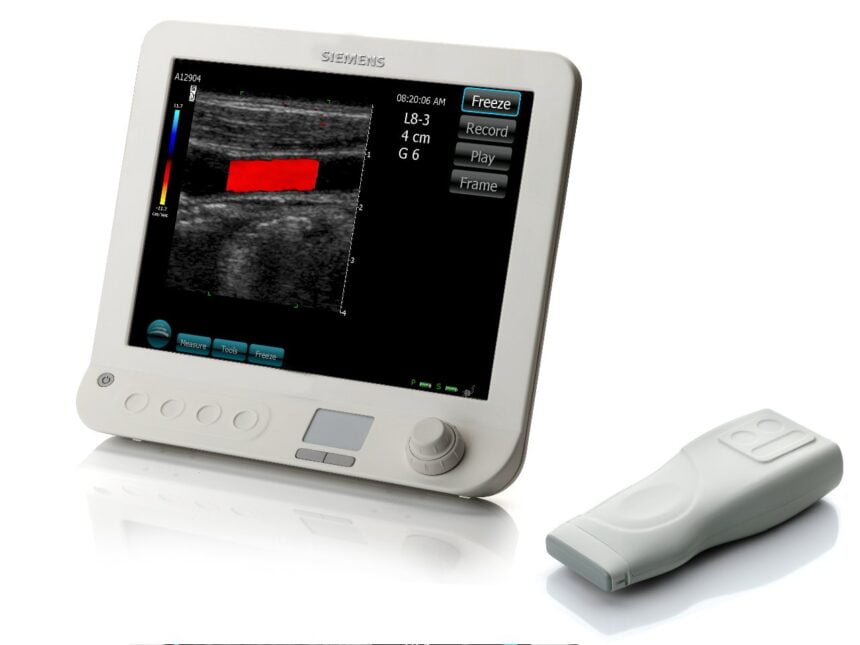
But here at RSNA2012, Siemens Healthcare has introduced a cable-free, wireless ultrasound system. The “Acuson 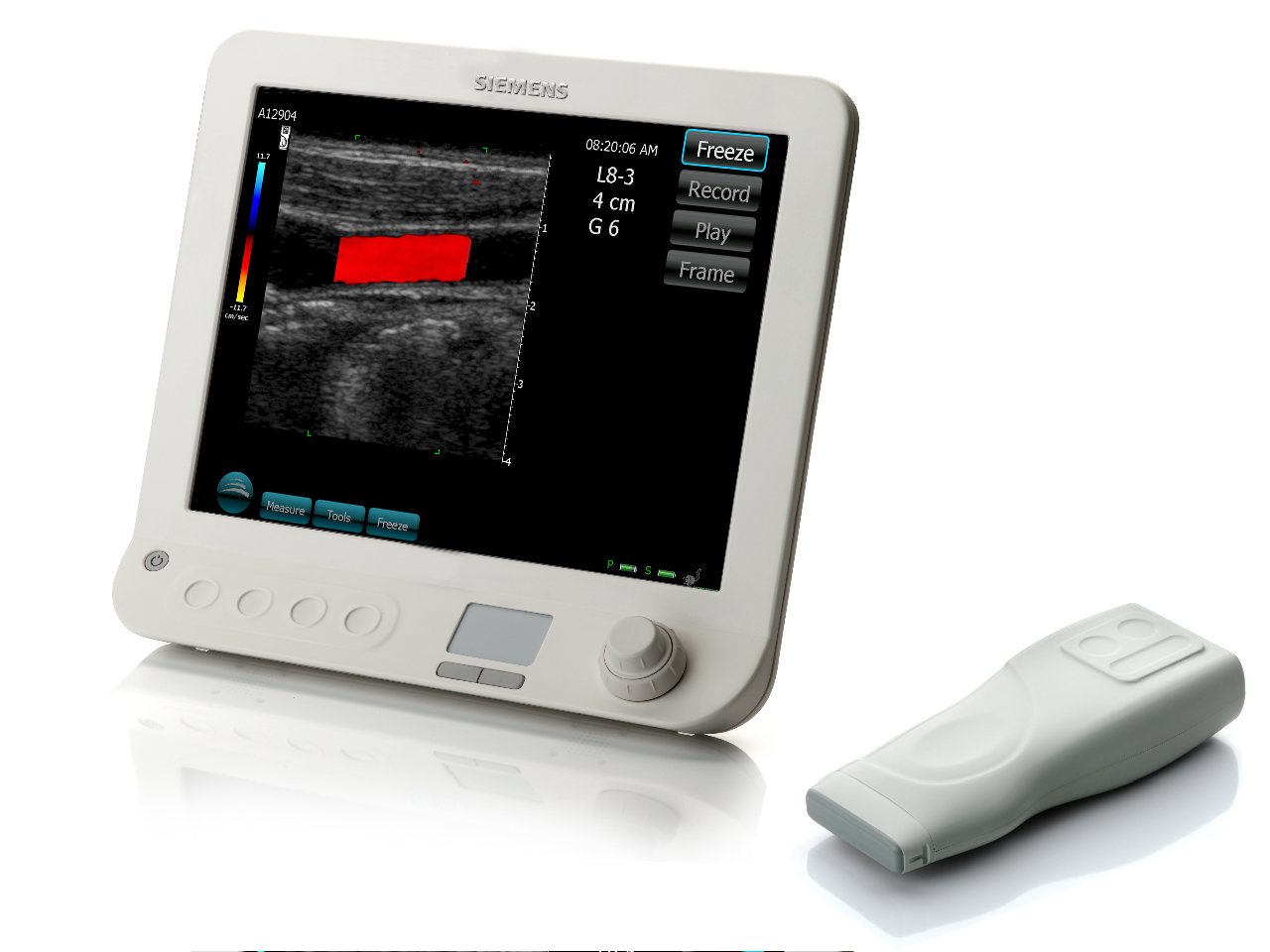 Freestyle” ultrasound system will, the company said, expand ultrasound’s use in interventional and therapeutic applications.” The technology is said to aid workflow and enhance image quality.
“This is the first wireless ultrasound system, the first system with a wireless transducer,” said Mike Cannon, Siemens’ head of point of care for ultrasound. “That’s the goal that a lot of people in imaging have had for a long time. There were a lot of people in ultrasound asking for it. There were a lot of technical challenges to get there and that’s why we’re the only one right now. There were design challenges because the use we’re going after — interventional guidance — still requires really high quality images. So we had to meet the conventional performance demands but we had to do it with an unconventional system, a wireless probe.”

The transducer looks like a fat gray TV remote without any buttons. Joe Urbano of Siemens put some gel on the end and held it to his neck and I saw a very vivid image of his carotid artery on a laptop-sized computer screen. The transducer takes a rechargeable lithium ion battery, like your smart phone, and has a range of about 10 feet — typically longer than the cabled device.
Said Cannon: “To move this amount of data for video over the link, we had to devise a system where the available bandwidth could sustain real time imaging. The probe is lightweight, ergonomic and rechargeable. One of the real innovations is doing all this with the probe and doing it at low power to get good battery life and good thermal control so it doesn’t get too hot.
“The real advantage of the wireless is guiding procedures and guiding interventions,” Cannon said. He mentioned procedures using ultrasound guidance such as vascular access, nerve blocks, biopsies, draining cysts, “These would be hospital-based and procedural based, used as adjunct to some kind of therapeutic intervention,” he continued.
Three wireless transducers are available for the Acuson Freestyle system, covering a range of general imaging, vascular and high frequency applications such as musculoskeletal and nerve imaging. But don’t expect to find one of these bad boys under your Christmas tree; Cannon said the Freestyles won’t ship until spring. Pricing is still to be determined.
“We’ve had senior physicians say they never thought they’d see this in their lifetime,” said Cannon. For those folks, a lifetime of waiting is over.