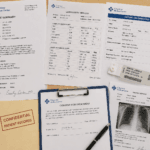
As Dr. Bonnie Feldman, former dentist, health consultant and sell-side equity analyst notes, “the enormous variety of data – structured, unstructured and semi-structured – is a dimension that makes healthcare both interesting and challenging.” In her recent report, Big Data in Healthcare Hype and Hope, she also identifies six ways big data is being applied in healthcare:
As Dr. Bonnie Feldman, former dentist, health consultant and sell-side equity analyst notes, “the enormous variety of data – structured, unstructured and semi-structured – is a dimension that makes healthcare both interesting and challenging.” In her recent report, Big Data in Healthcare Hype and Hope, she also identifies six ways big data is being applied in healthcare:
- Support Research – Genomics and Beyond
- Transform Data to Information
- Support Self-Care
- Improve Patient Care
- Increase Awareness
- Pool Data to Build a Better Ecosystem
According to the report, healthcare stakeholders have different goals and hopes for big data and analytics:
- Patients want customer-friendly service, one-stop shopping, and better coordination for error-free, compassionate and effective care.
- Providers want real-time access to patient, clinical and other relevant data to support improved decision-making and facilitate effective, efficient and error-free care.
- Researchers want new tools to improve the quality and quantity of workflow – e.g. predictive modeling, statistical tools and algorithms for improved design and outcomes while successfully navigating the regulatory approval and marketing process.
- Payers are moving from fee-for-service to pay-for-performance, and want to use Big Data to help stratify population risk and incorporate wellness management, data analytics and API platforms.
- Pharma companies want to identify etiology of diseases, target appropriate candidates and implement successful clinical trials.Government is trying to reduce costs, enforce regulations and maximize the social value of data.
Based on the McKinsey Global Institute (MGI) estimates, harnessing big data can deliver savings of roughly $300 billion per year in US healthcare. Specifically, MGI believes that big data could help reduce waste and inefficiency in the following three areas:
1. Clinical Operations ( $165B)
- Comparative effectiveness research to help determine more clinically relevant and cost-effective ways to diagnose and treat patients.
- Clinical decision support systems to provide real-time information to emergency technicians, nurses and doctors to improve triage, diagnosis, treatment choice, prevent iatrogenic infections and readmissions, prescription and other medical errors.
- Other areas include increasing transparency about medical data, remote patient monitoring, and predictive analytics to identify individuals who would benefit from proactive care.
2. R&D ($108B)
- Predictive modeling could help produce a leaner, faster, more targeted, and lower attrition R&D pipeline in drugs and devices.
- Statistical tools and algorithms could improve clinical trial design and patient recruitment
- Analyzing clinical trials and patient records to identify follow-on indications and discover adverse effects before products reach the market.
- Ultimately, personalized medicine, emerging from the analysis of large datasets to help match the right medicine to the right patient at the right time.
3. Public Health
- Analyzing disease patterns and tracking disease outbreaks and transmission to improve public health surveillance and speed response.
- Faster development of more accurately targeted vaccines, e.g., choosing the annual influenza strains.
- Turning torrents of data into actionable information that can be used to identify needs, provide services, and predict and prevent crises, especially for the benefit of lower income populations.
So, what does this mean fo[r providers and hospitals? Tune in to Autonomy VP, Dr. Alan Stein’s, recent TED talk to learn more about bringing big data and personalized medicine together to transform healthcare.