By using this site, you agree to the Privacy Policy and Terms of Use.
Accept
Health Works CollectiveHealth Works CollectiveHealth Works Collective
  • Health
    • Mental Health
  • Policy and Law
    • Global Healthcare
    • Medical Ethics
  • Medical Innovations
  • News
  • Wellness
  • Tech
Search
© 2023 HealthWorks Collective. All Rights Reserved.
Reading: How Computers Can Help Doctors to Improve Empathy
Share
Notification Show More
Font ResizerAa
Health Works CollectiveHealth Works Collective
Font ResizerAa
Search
Follow US
  • About
  • Contact
  • Privacy
© 2023 HealthWorks Collective. All Rights Reserved.
Health Works Collective > eHealth > How Computers Can Help Doctors to Improve Empathy
eHealthTechnology

How Computers Can Help Doctors to Improve Empathy

malpani
malpani
Share
4 Min Read
SHARE
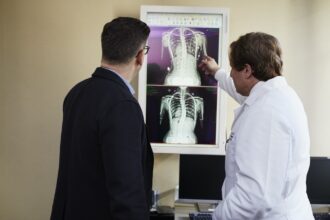
Many people are worried that the introduction of computers into medicine will further depersonalize clinical care . Their concern is that technology will disrupt the doctor-patient relationship because doctors will start focusing more on the computer screen , rather than on their patients. It’s true that doctors find technology very seductive and many enjoy interpreting medical reports and images and scans because they feel this is part of their scientific core competence.
Many people are worried that the introduction of computers into medicine will further depersonalize clinical care . Their concern is that technology will disrupt the doctor-patient relationship because doctors will start focusing more on the computer screen , rather than on their patients. It’s true that doctors find technology very seductive and many enjoy interpreting medical reports and images and scans because they feel this is part of their scientific core competence. However, taking a digital technology versus humanistic clinical care is not a very helpful viewpoint . By adopting such a polarizing approach , we’re treating this as a confrontation , and are wasting a great opportunity to improve medical care. Both are complementary , and rather than treat technology as a distraction, we need to learn that it can actually help doctors practice more humane medicine . By providing them with additional tools to make the right diagnosis, it gives them more time to talk to their patients, thus promoting doctor-patient interaction !

When a doctor sees a patient , his first priority is medical – he needs to make the right diagnosis and craft the correct treatment plan. It’s only when he is sure he has done a good job as a clinical scientist can he then think about managing the patient’s psyche and emotions. This means that the doctor has two tasks which require complementary skill sets. The first task is one which requires logical scientific analysis , where he collects the right data and works through a differential diagnoses . It is only after he has made the right diagnosis that he can then  move on to his second task , which consists of caring for the patient ; holding his hand ; and helping to guide him . Some doctors who have an excellent bedside manner are often poor diagnosticians; and this can make the patient’s life very difficult , because the patient really does require both compassion and competent clinical care .

Computers can help doctors to make the right diagnosis more quickly, because they can act as peripheral digital brains . They help the doctor to ensure that he has covered all the diagnostic possibilities , so he is no longer worried that he may have missed something important . This is one of the major fears which every doctor has ; and until he has confidence in his clinical diagnosis, he cannot move on to dealing with the patient as a human being . The computer can help to expedite the process of making the right diagnosis so that the doctor has more time to spend talking with the patient . It can also give the doctor a lot more security in his clinical competence, so that he can then work on polishing his interpersonal communication skills. Compassion is something which a doctor can provide only after he has ensured that he’s provided basic correct clinical care. If a computer can allow him to do so more efficiently, he then has more time and energy to be able to enhance his empathy.


TAGGED:doctor/patient relationship
Share This Article
Facebook Copy Link Print
Share

Stay Connected

1.5KFollowersLike
4.5KFollowersFollow
2.8KFollowersPin
136KSubscribersSubscribe

Latest News

photo of a woman with red hair holding a brown brush
How Long Does It Take to Recover from Hair Fall?
Fitness
June 12, 2026
a person putting a bandage on a woman s head
How a car accident can leave hidden injury patterns
Global Healthcare
June 12, 2026
emergency medical simulation with rescue team outdoors
How car accident injuries can reshape physical recovery and everyday health routines
Policy & Law
June 12, 2026
wellness app development
Why Proper Calculation Matters in Research and Wellness Applications
Health Technology
June 11, 2026

You Might also Like

medical manufacturing
InfographicsMedical Innovations

Tiny Errors, Big Consequences In Medical Manufacturing

February 17, 2026

Amazing Health Tech in Surprising Places: A Report from Azerbaijan

November 16, 2013

Book Reviews: EHRs

February 7, 2012
Understanding and Embracing the Benefits of Simulation Training in Healthcare
Technology

Understanding and Embracing the Benefits of Simulation Training in Healthcare

May 30, 2020
Subscribe
Subscribe to our newsletter to get our newest articles instantly!
Follow US
© 2008-2025 HealthWorks Collective. All Rights Reserved.
  • About
  • Contact
  • Privacy
Welcome Back!

Sign in to your account

Username or Email Address
Password

Lost your password?