The patient has been an important focus in radiology throughout 2013. Dose efficiency, smart imaging, quality care, patient engagement and patient access have been hot topics and it has been fascinating to follow the trends and technologies being developed as the healthcare landscape changes at a consistently rapid pace. Focusing on healthcare information solutions, patient engagement and access has always been near and dear to me.
The patient has been an important focus in radiology throughout 2013. Dose efficiency, smart imaging, quality care, patient engagement and patient access have been hot topics and it has been fascinating to follow the trends and technologies being developed as the healthcare landscape changes at a consistently rapid pace. Focusing on healthcare information solutions, patient engagement and access has always been near and dear to me.
We made it a priority in 2013 to investigate the patients’ relationship with their radiological images and where the portals/access points fit into the healthcare process. The goal was to learn how patients truly feel about these technologies empowering them with more medical information by providing access to it. One example of a valuable discovery we made showed that age plays no role in determining whether or not a person will want to use a patient portal—59% of respondents over the age of 71 said they were very likely to use an image portal.
We also found that patient portals can have benefits for physicians and radiology practices too. Out of the 1,000 respondents, 79 percent of patients would be more likely to return to a facility that offers online image portal and 76 percent indicated they would recommend the facility to others. From statistics such as this, is has become clear that patient portals are becoming a vital component of both the radiology industry and patient care process.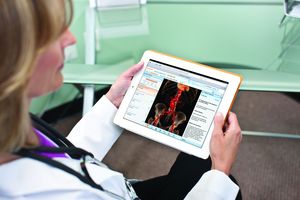
More Read

Patient portals will need to be intuitive if physicians are to ensure they are providing the most value to their patients in terms of care. Studies have shown that if a technology is difficult to understand or learn, then users are likely to be turned off from it for good. For the patients to have the ability to use the technology, physicians must be able to explain its use simply with limited steps.
Additionally, the portal, since it is a zero-footprint technology, means it can be embedded to an EHR patient portal. This provides a significant value for the patient as they would log onto a single portal from their care provider, and while they are requesting appointments and paying bills, they can also view their imaging results. When it comes to providing value for the patient, with this integration, zero-footprint capability, vendors are ensuring that imaging does not become a stand-alone technology.
As an add on the the zero-footprint feature, portals also must be easy to access for the patients. Building these portals with HTML5 ensure that the patient can access the information via a variety of devices: desktop, laptop, or mobile device. As opposed to portals built as mobile applications, a HTML5, browser-based portal makes accessibility almost ubiquitous—by building portals using HTML5, the portal must be accessed using a browser that supports the coding language.
On Monday, December 2 at 9:00 a.m. in the Lakeside Ballroom, I will be participating in the RSNA Mobile Connect area, which will have technology experts on hand to help physicians get the most out of their mobile devices. In addition to one-on-one assistance for mobile device users, this area will feature a presentation area highlighting a diversity of mobile topics.